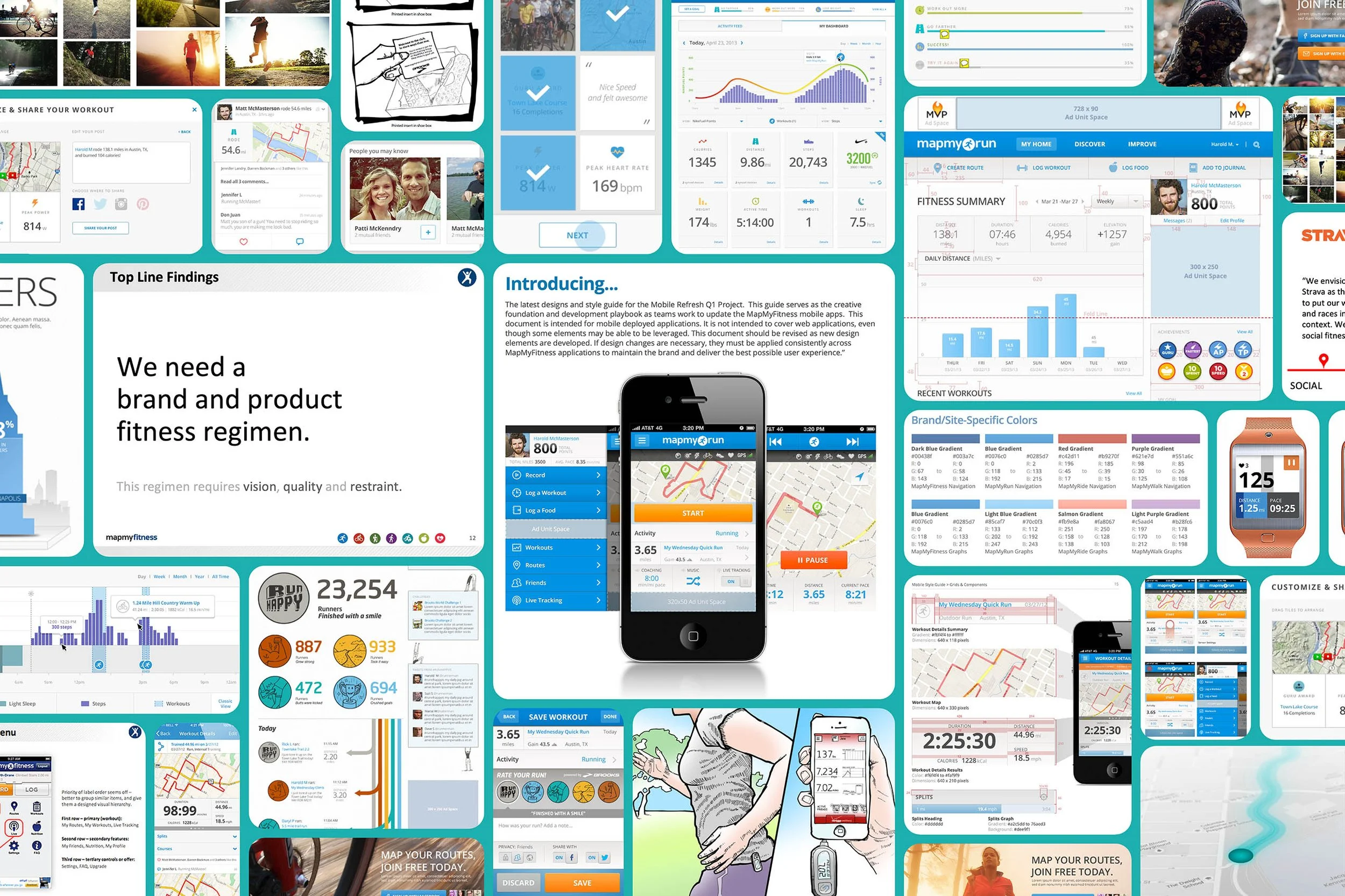
MapMyFitness
Breathing new life into the original fitness tracking brand

My role: Creative/UX VP, then Chief Product Officer. Led redesign of app and web, product management, and marketing creative. Executive duties during Under Armour acquisition.
MapMyFitness is one of the original fitness tracking platforms: App Store from day one, GPS for run/ride/walk, and tens of millions of users. But newer apps raised the bar on clarity and personality. Scale alone wasn’t enough.
The work wasn’t a cosmetic refresh. It was transforming how a 20MM+ product (500k activities a day) was designed, built, and expressed, then helping take it into Under Armour.
Problem: Millions of athletes used MapMyFitness, but it was losing ground: dated, hard to love, thin on brand.
Solution: Hire a 13-person Design/UX team, adjust PM approach, create a Brand Voice and Design Guidelines, then redesign mobile and web around that system.
Benefit: A better, more modern product athletes wanted, and a product ready for Under Armour’s connected-fitness stage.
Results during my tenure:
Complete redesign that quantifiably increased satisfaction and usability.
5-star app rating, despite most redesigns causing frustration and churn (people learn bad interfaces!).
A design system that supported major enhancements and brand partnerships, not just incremental features.
A million new users a month, a hockey stick of growth to 25+ million registered users, leading to acquisition by UA
I built the rationale and consensus for a massive redesign.
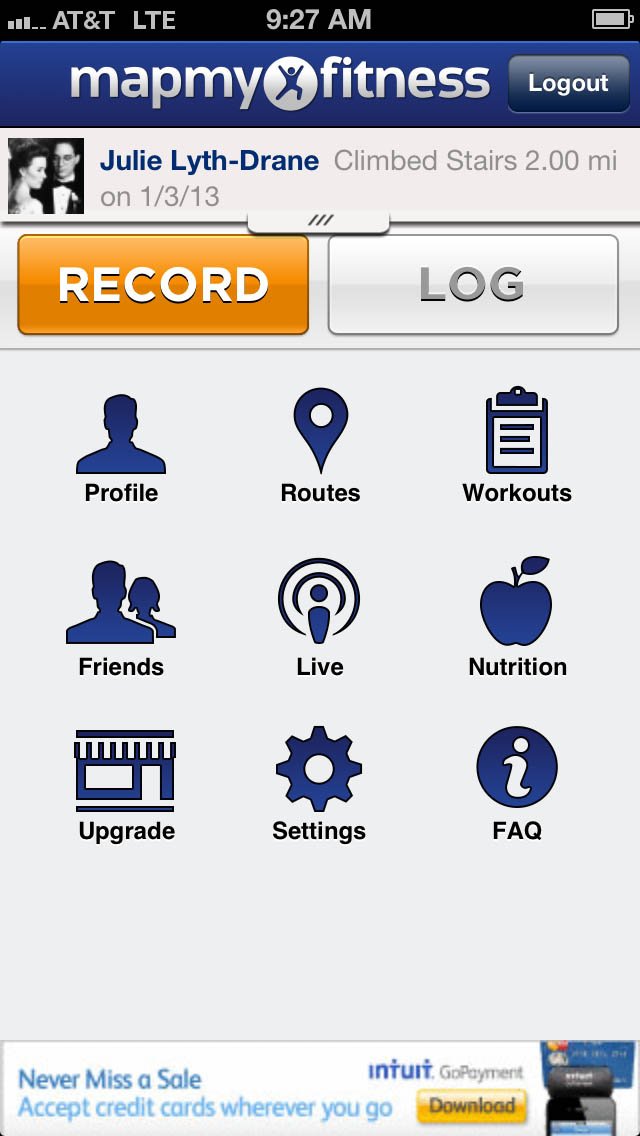
My first step was to evaluate the entire product suite. The results were startling, but energizing, as the product was in dire straits from a brand, design and UX perspective. I expressed that POV in a 120-page heuristic analysis that built company-wide consensus for a full redesign.
The TL/DR;
The product felt stuck in an earlier era: hard to learn, dated, inconsistent, no brand POV beyond “fitness tool.”
Web and app barely shared any visual and content DNA. Sometimes, the product looked cheap.
The design details changed on every single screen. Routes, colors, and copy were an assortment of jumbled styles.
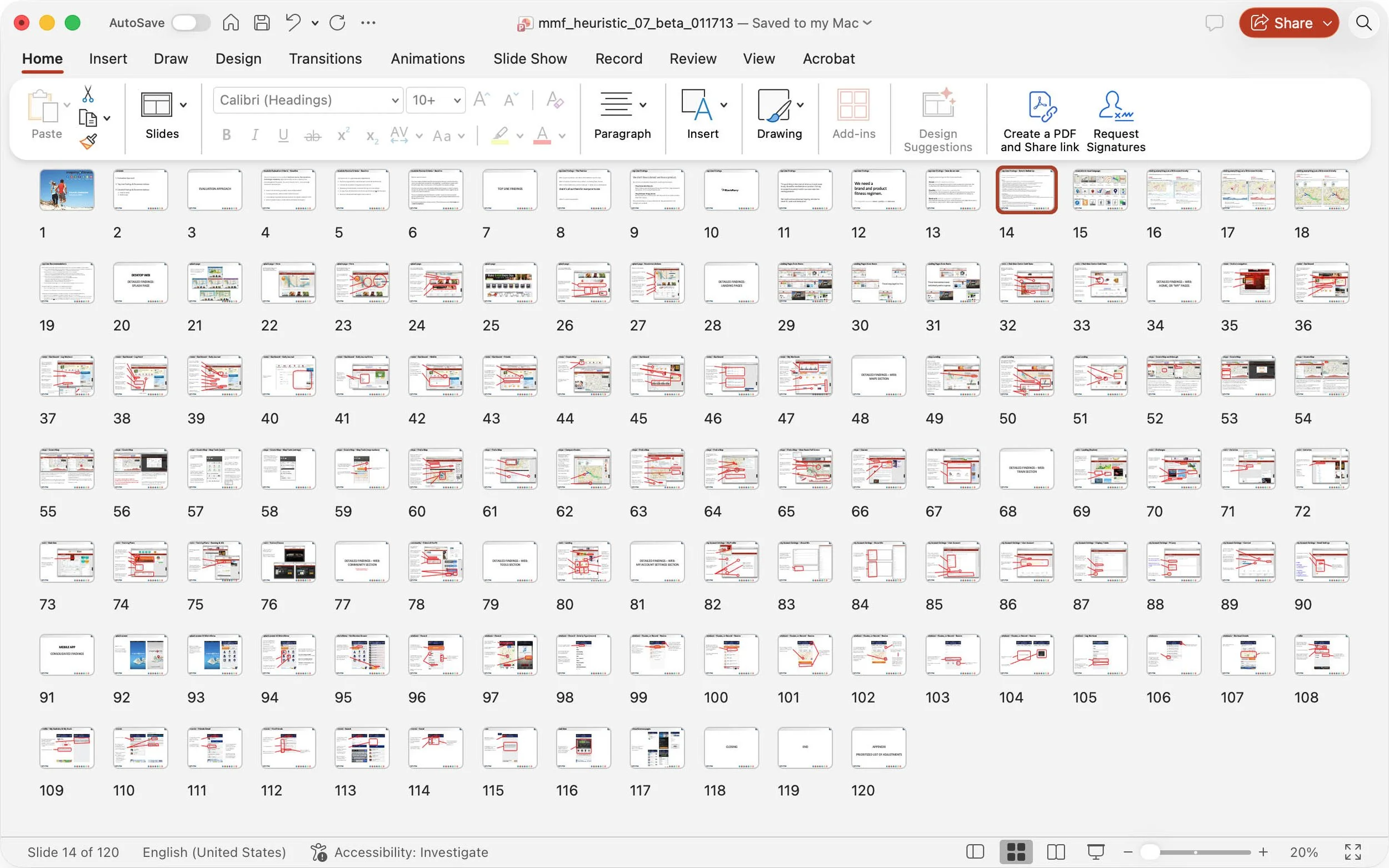
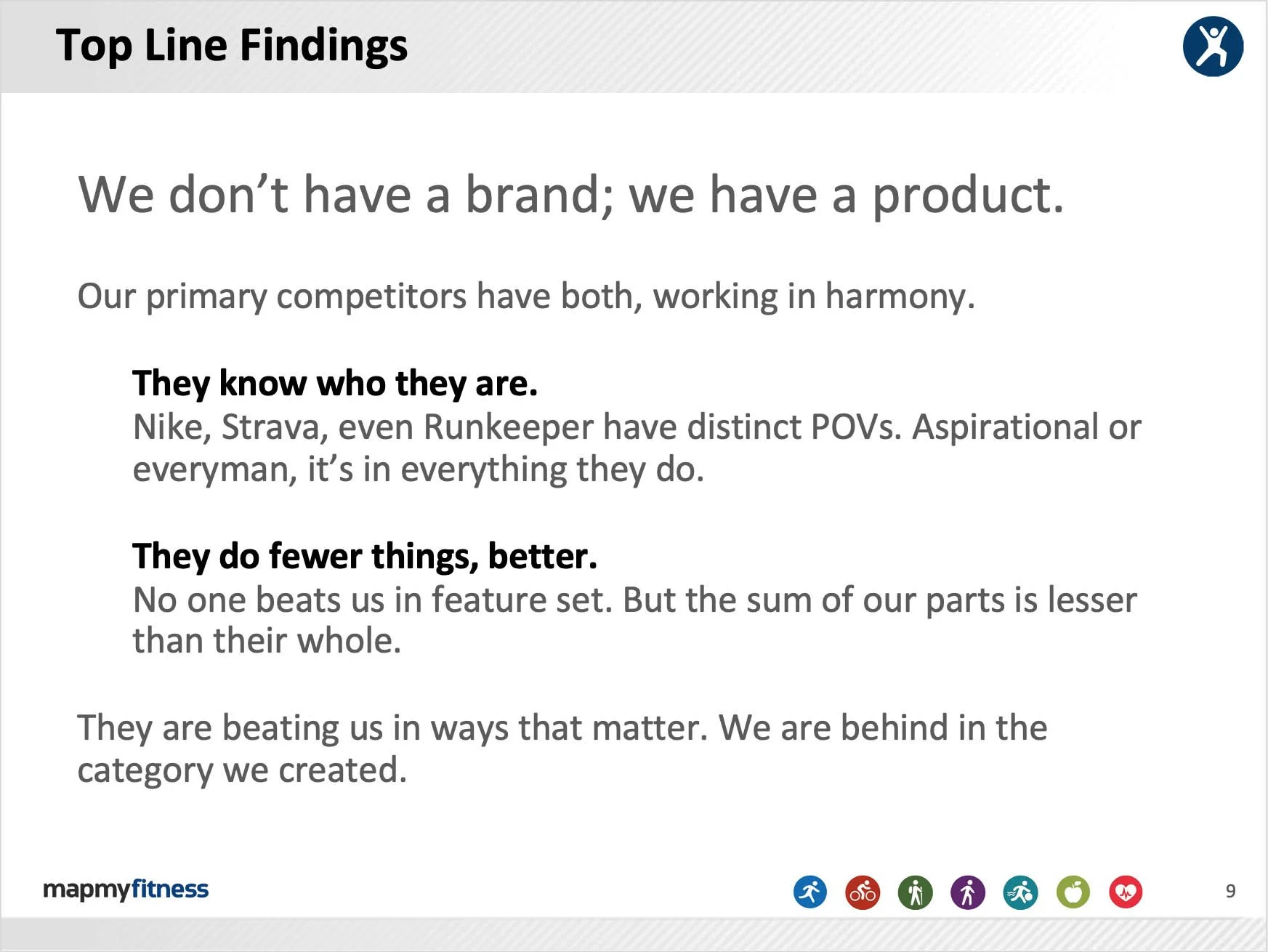
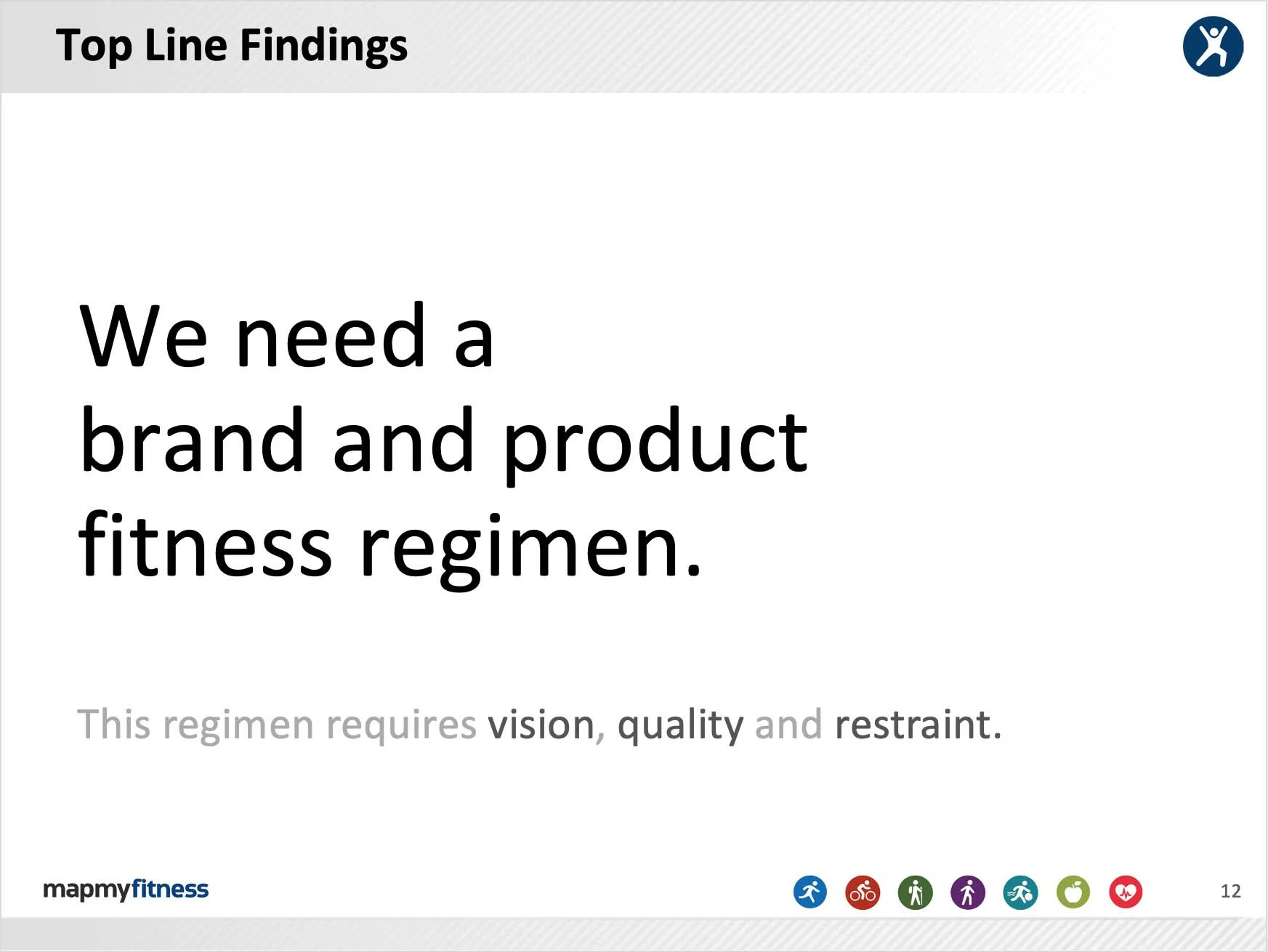
After a congratulatory accomplishments page, I braced the team for hard truth. Competitors had stronger points of view, and did less, better.
The theme was relatable to a team of athletes. Our product was flabby, out of shape, not close to what it could be. We had to rededicate to being the best, not just the first.
We transformed the brand with a modern, usable design system.
This enabled a complete redesign across iOS, Android, and web. The project galvanized the company to incorporate design into the fundamental product development process; no more ‘create a button for me’.
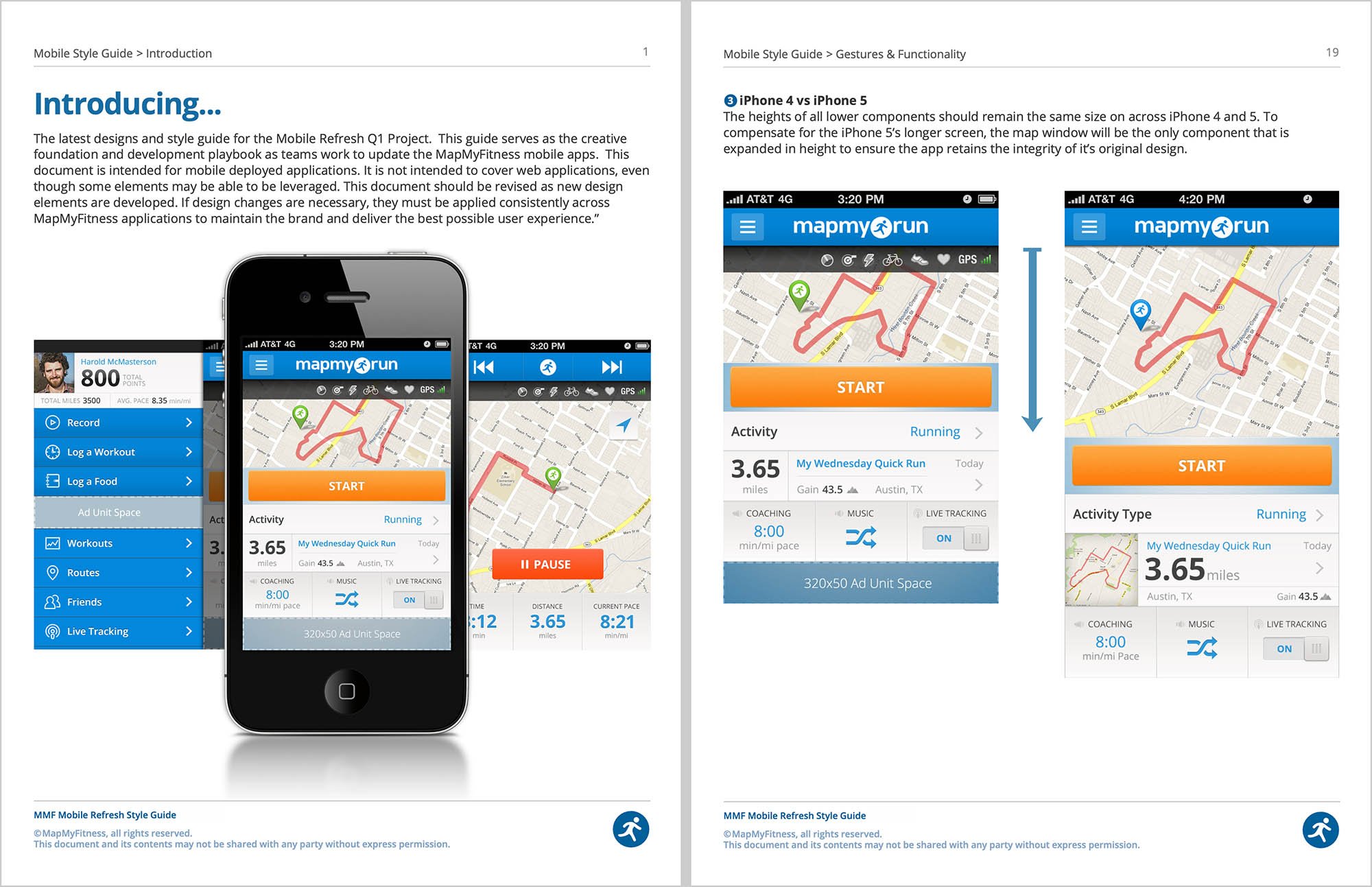
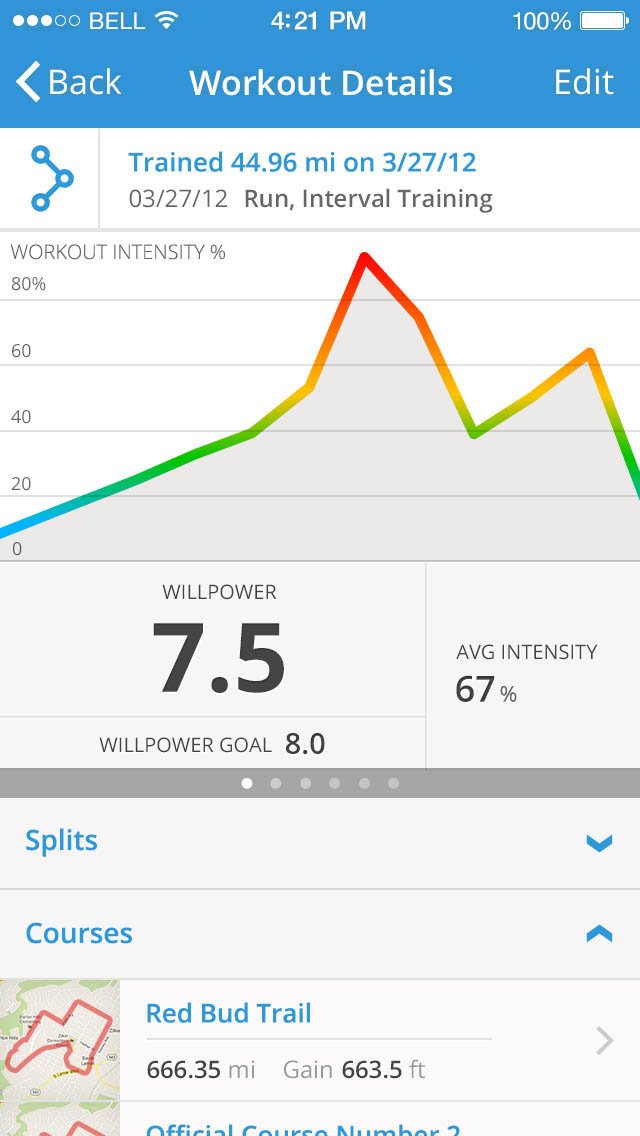
A modern, beautiful and usable mobile design.
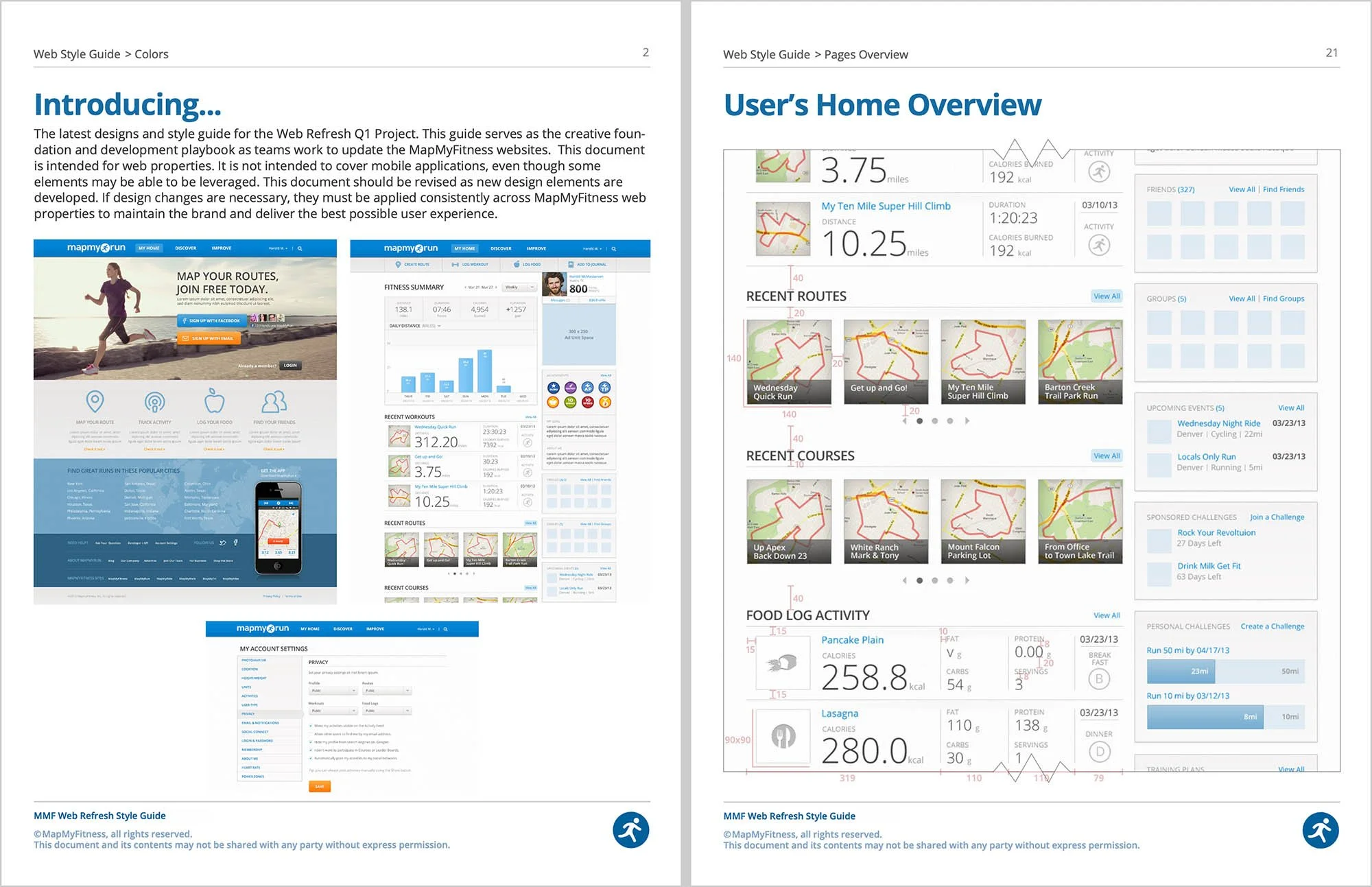
Web and mobile under a cohesive branded style.
In 4 months we transformed every pixel – better UX, better design, incorporating years of user feedback – and relaunched to universal acclaim.
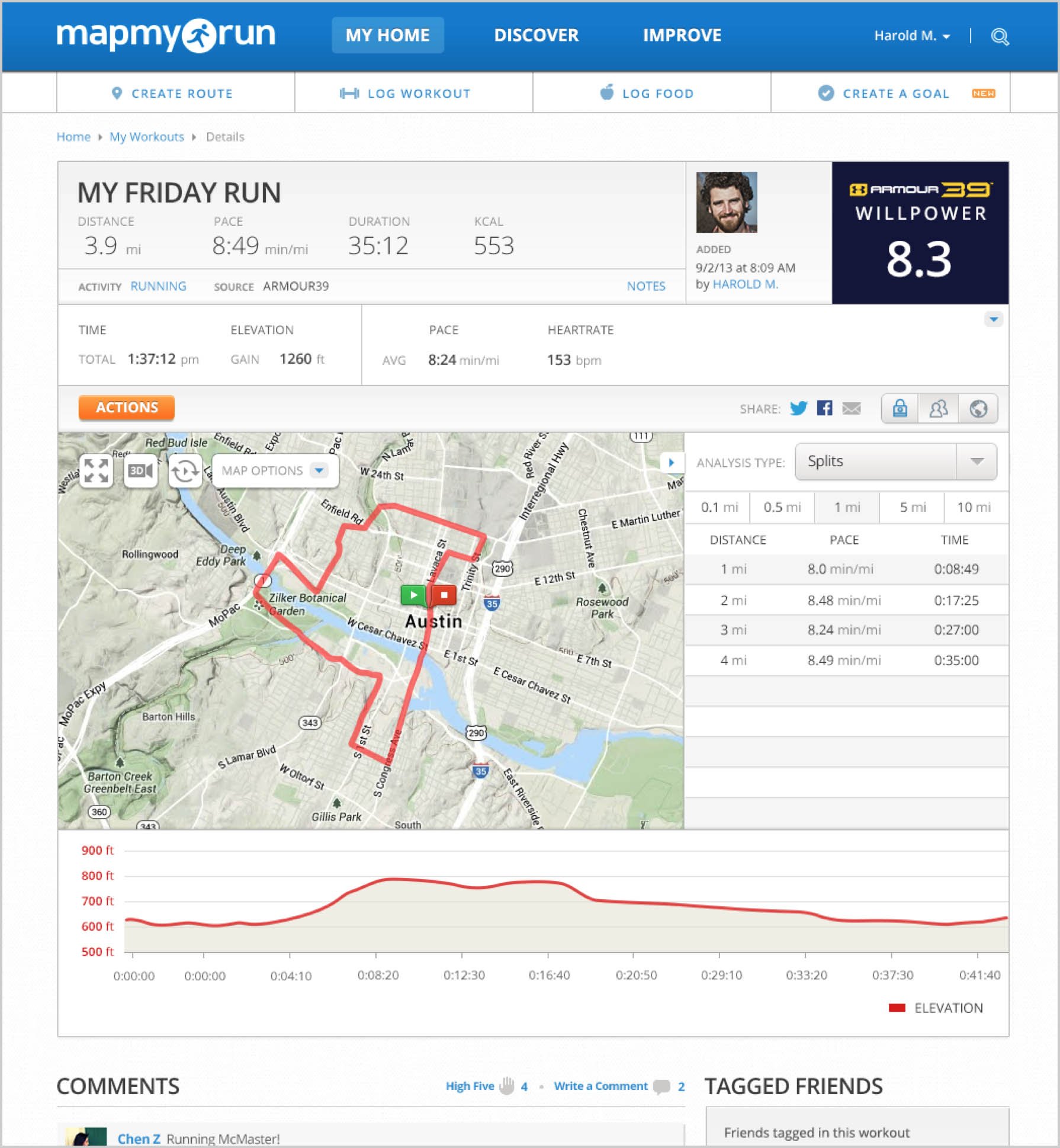

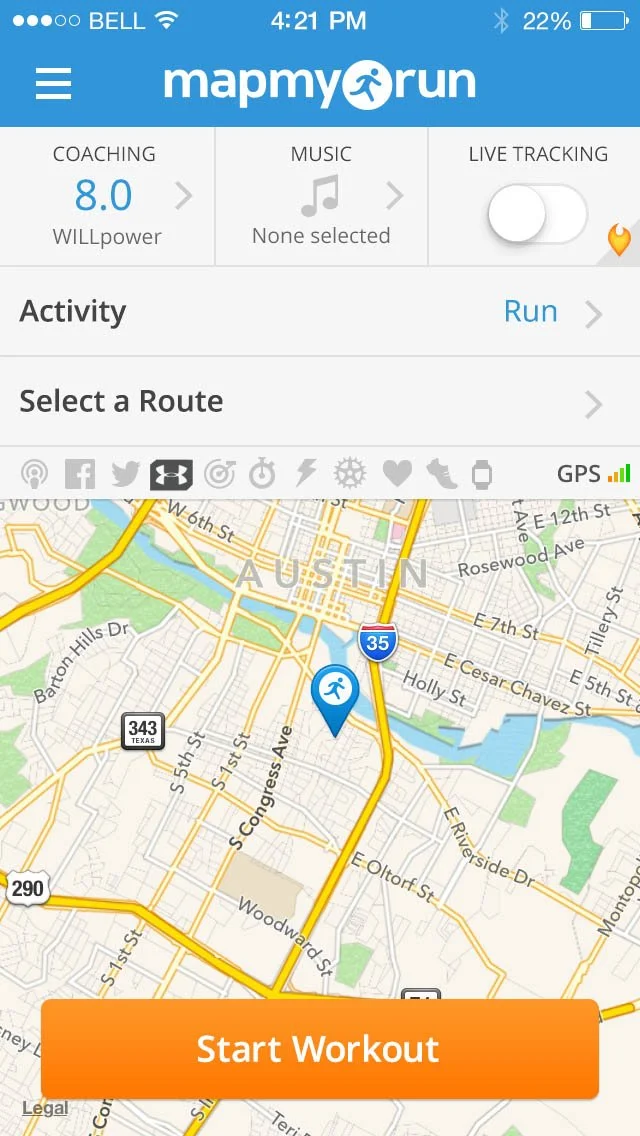
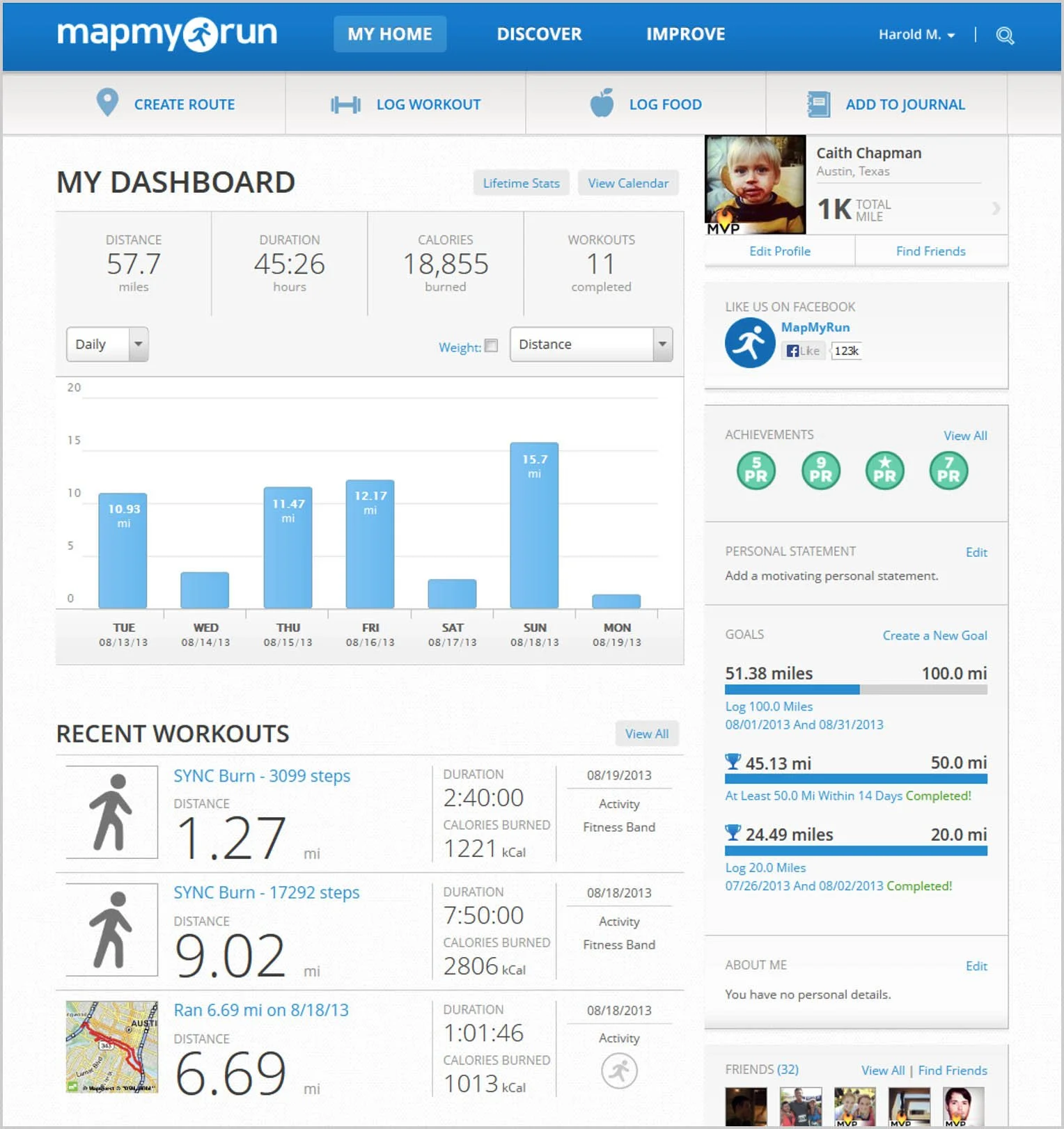
Our ‘24/7 Dashboard’ & ‘Activity Feed’ embedded us in daily life.
Post redesign, we turned our attention to much-needed enhancements. We already integrated with almost every wearable, but with people using ambient trackers like Fitbit and Apple Health, built a 24/7 Dashboard for a consolidated view into daily ambient movement, workouts and sleep. Modern, card-based, future-proofed for years to come.
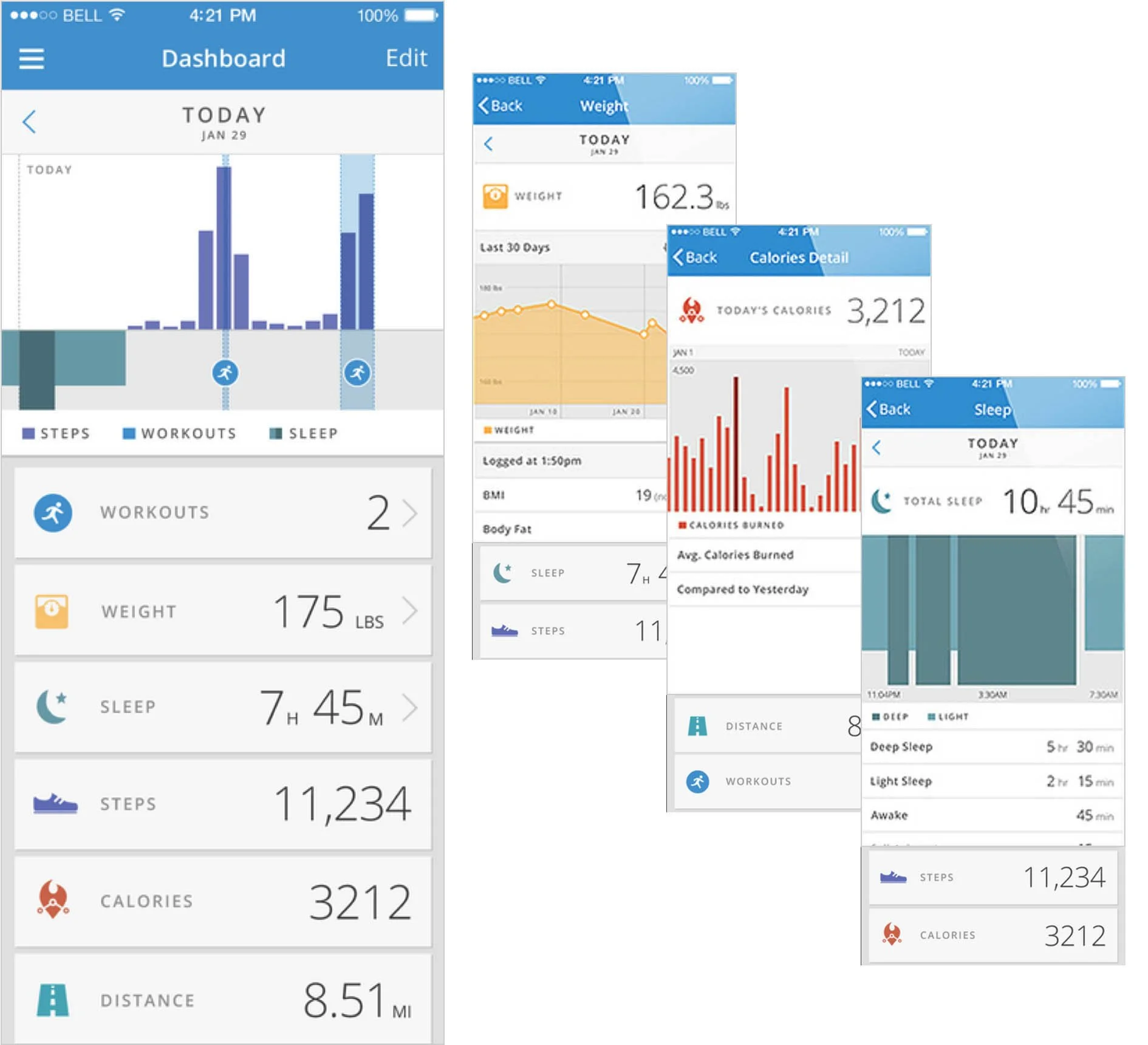
Mobile for constant monitoring throughout the day.
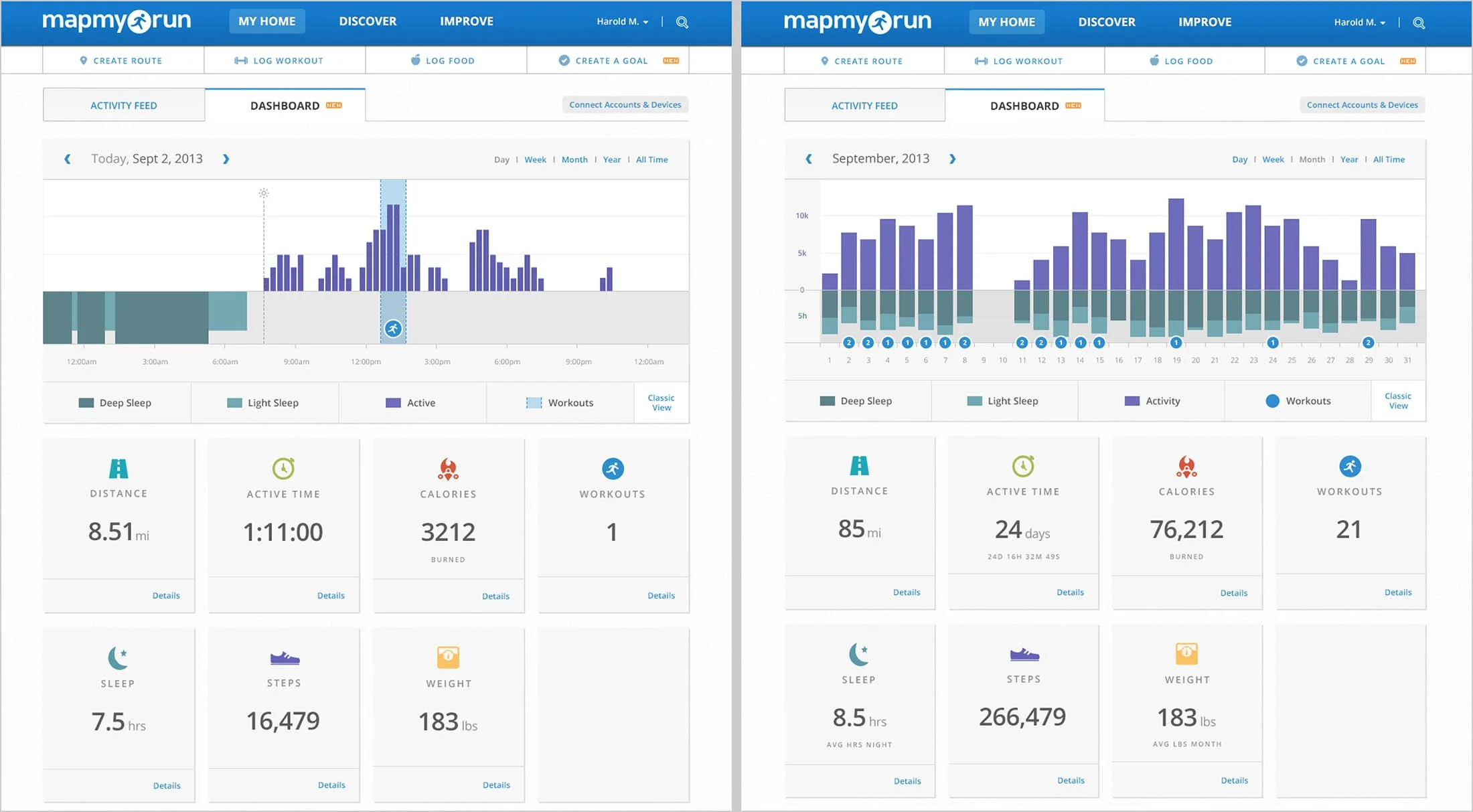
Dashboard views for deep dives and cross reference.
Our Activity Feed turned MMF into a social network, with the workout as currency.
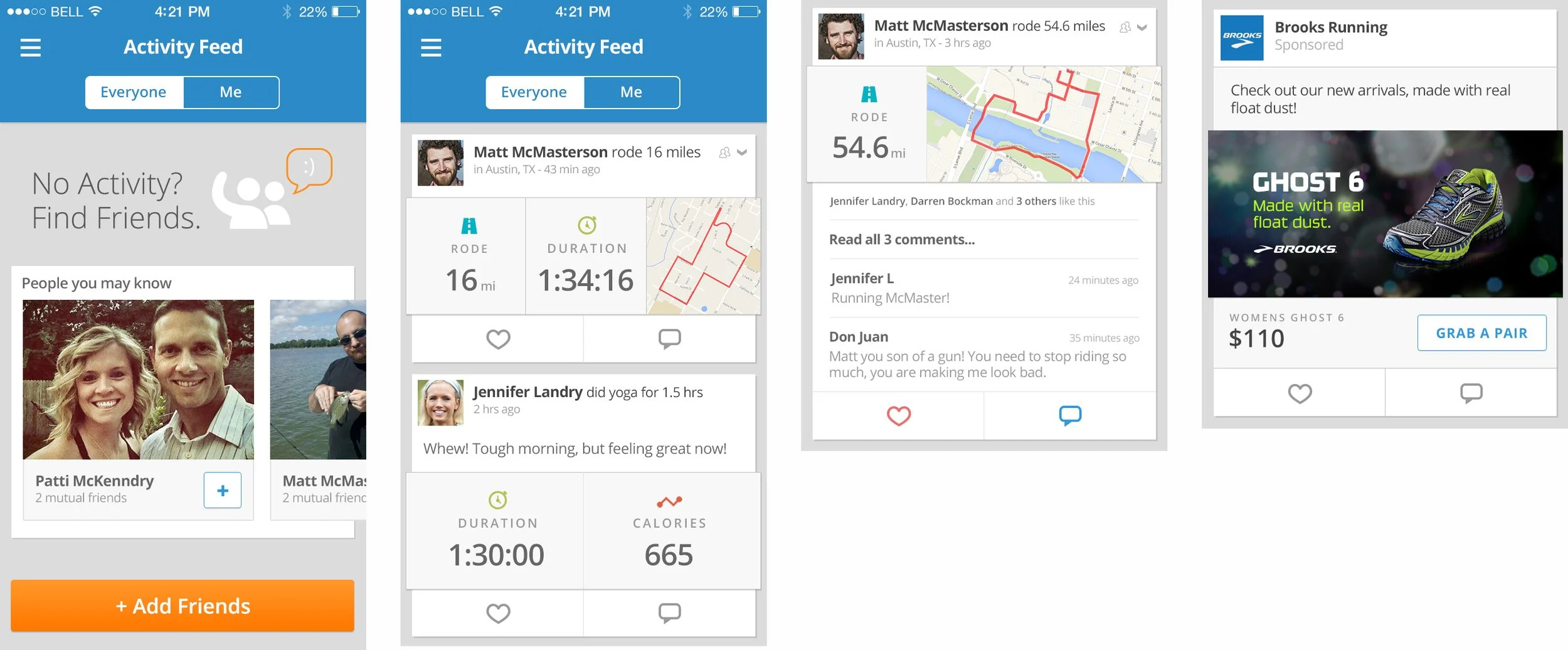
We facilitated encouragement, tips, meetups, and more. This approach would pay off when joining UA.
We made a ton of meaningful experiences for athletes all over the world.
We partnered with countless great brands and innovated our own features to surprise and delight our athlete community.
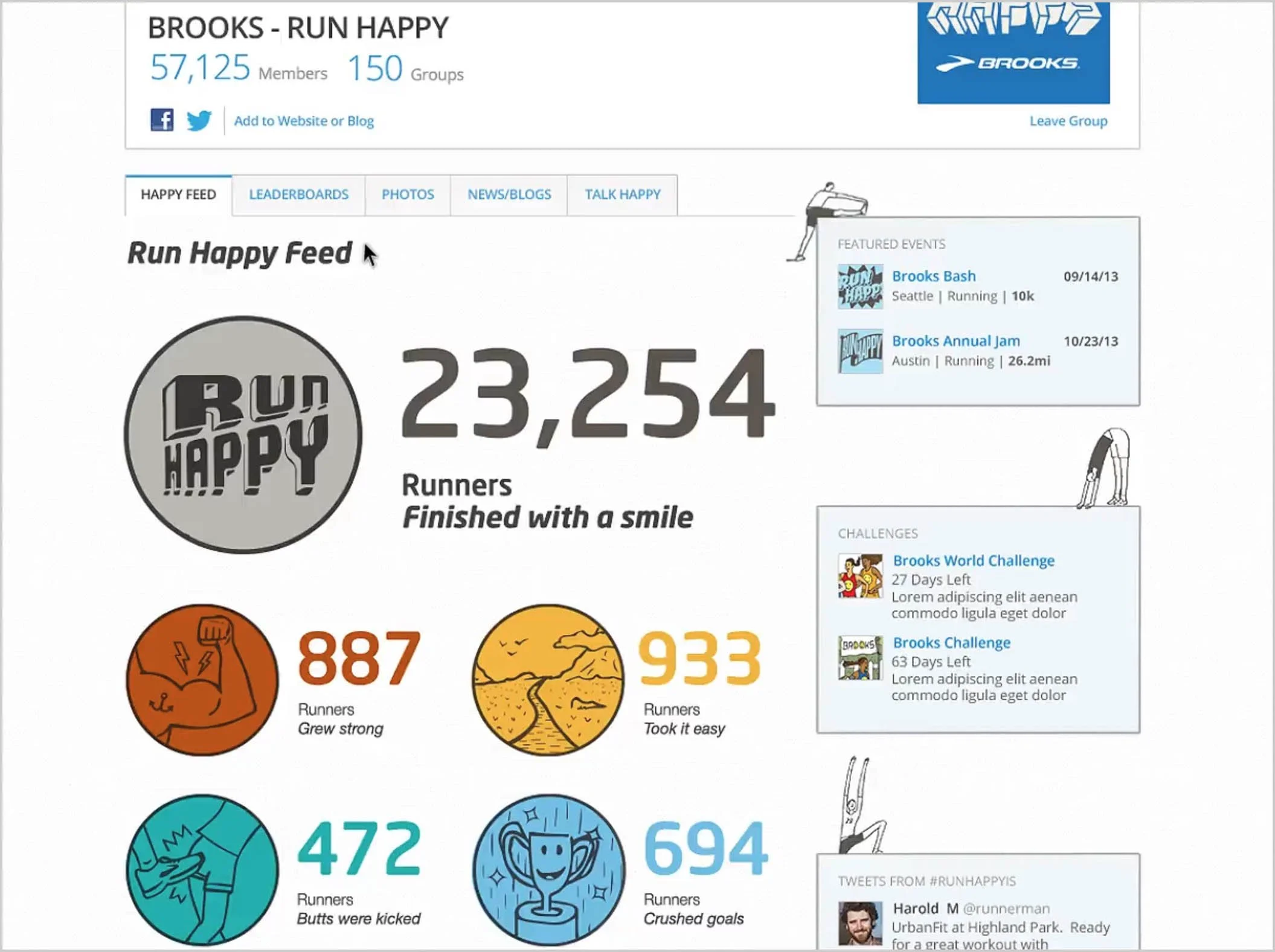
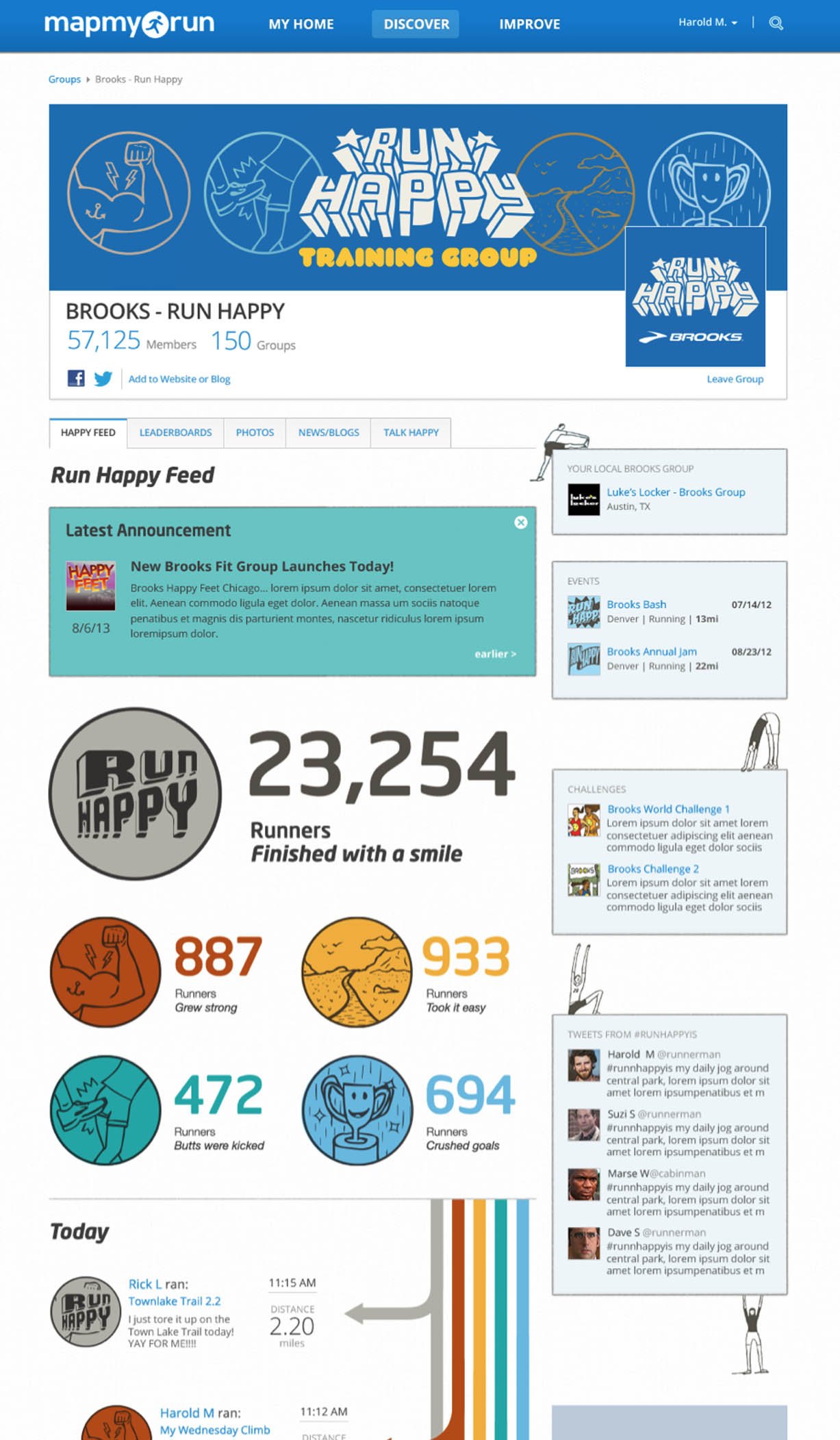
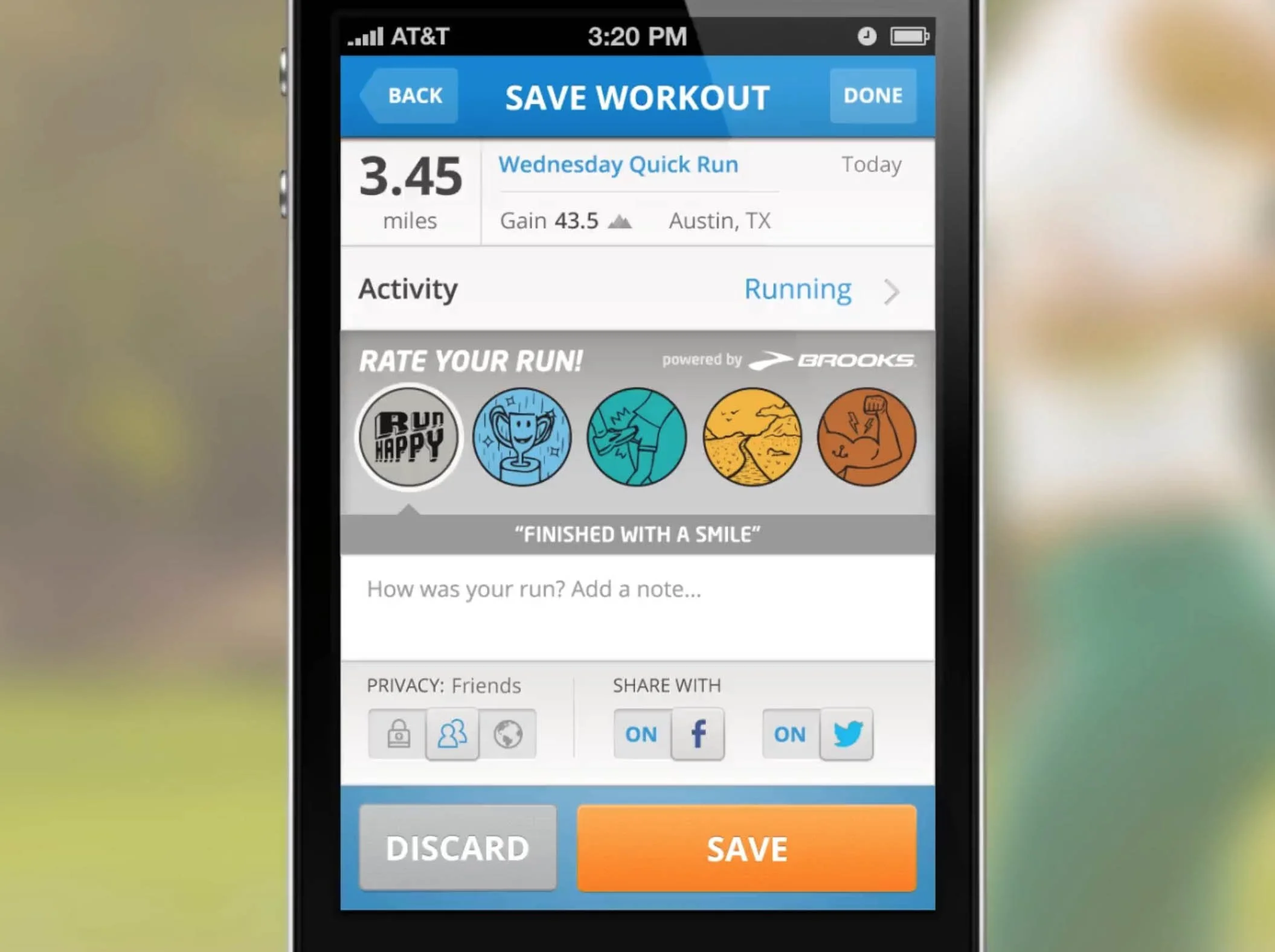
A Brooks campaign challenge that engaged hundreds of thousands of runners.
Sharing any part of your workout.
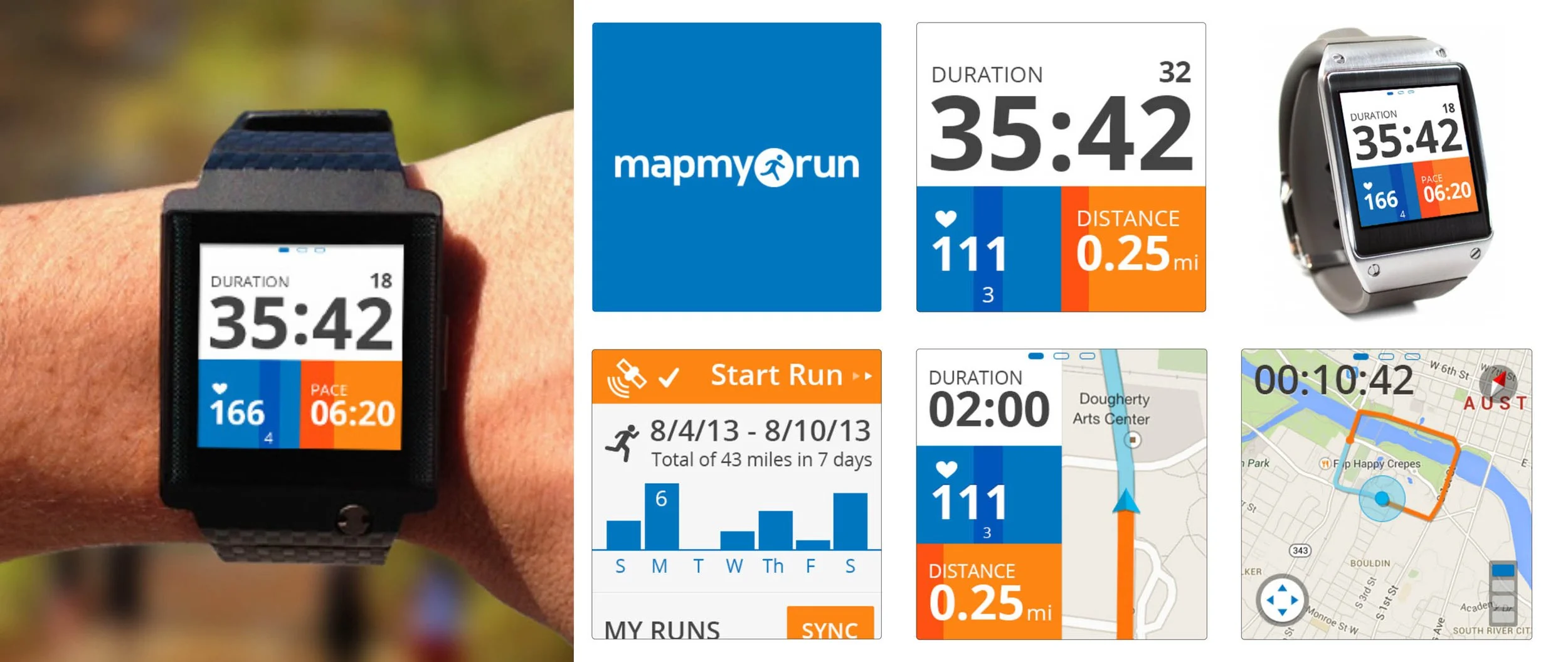
One of the first apps on the Casio G-Shock and Samsung Galaxy Gear smartwatches, from prototype through released hardware.